
Wooden Fences and Wood Gates
Venice, Marina Del Rey, Los Angeles, Brentwood
This fence and gate page is focused on the use of the Common Redwood. - MID RANGE PRICED
This type of wood is a lower cost here in Los Angeles compared to the fence boards that we use on our designer fences and HD fencing.
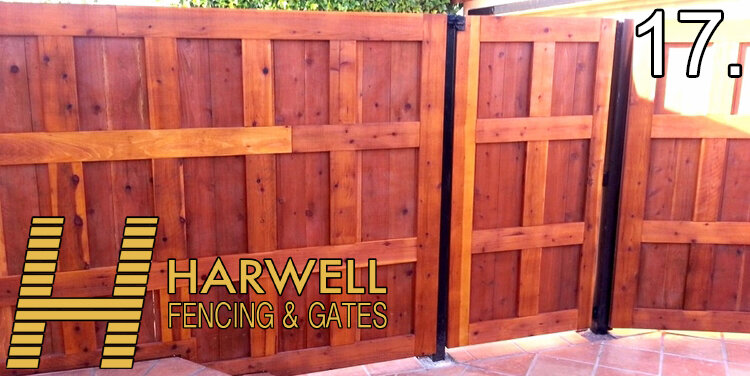
The lower cost wood can still look very nice as you see on this gallery below.
Clear redwood is about 3 - 4 times the price as the common option - "Clear" refers to having no knots, and it also provides a smoother, higher end finish because this wood is also dry.
CALL NOW 310-736-2674
Includes the pressure treated 4 x 4 posts set in concrete + 2 x 4 framing
+ Common Redwood or Common Cedar fence boards - Whatever is most available
Get a Quote Now!
Common redwood is generally on the "greener" side of fencing materials. That is the main reason that it saves you money, because "green" refers to wet wood. When it dries out this wood can split, crack etc. It also shrinks to provide 1/8" - 1/4" gaps between the fence boards, even if they were touching when it was assembled.
Our midrange fences and gates still contain all of the professional craftsmanship that we are known for, as well as the finishing details even when this common redwood is used.
Choose More Fence Designs
Note: Mid Range Fences on this gallery will save you 25%-35% compared to the fences on the Horizontal Fence or HD Fence category.







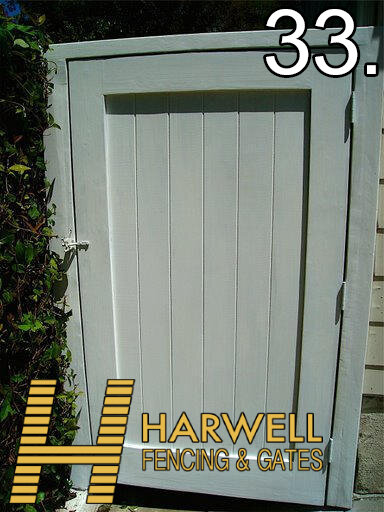


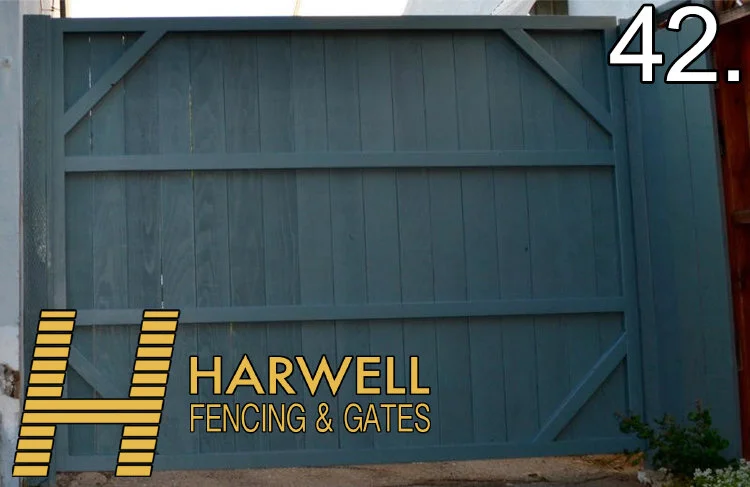
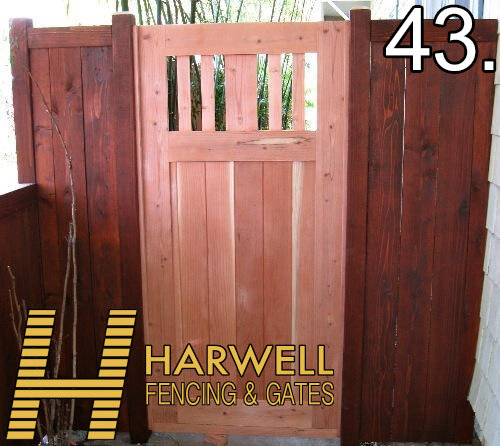


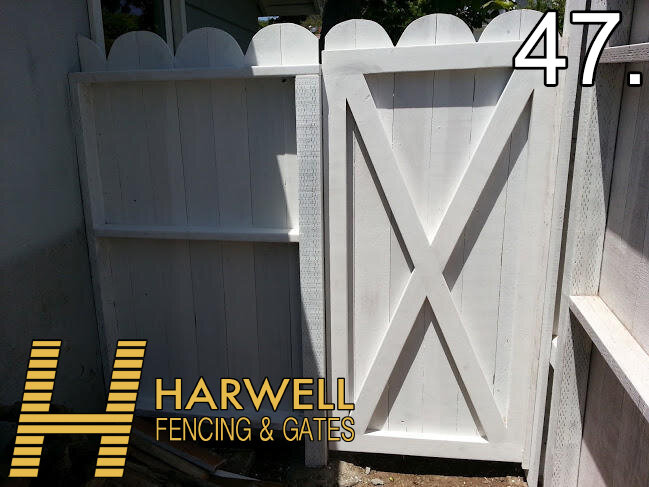

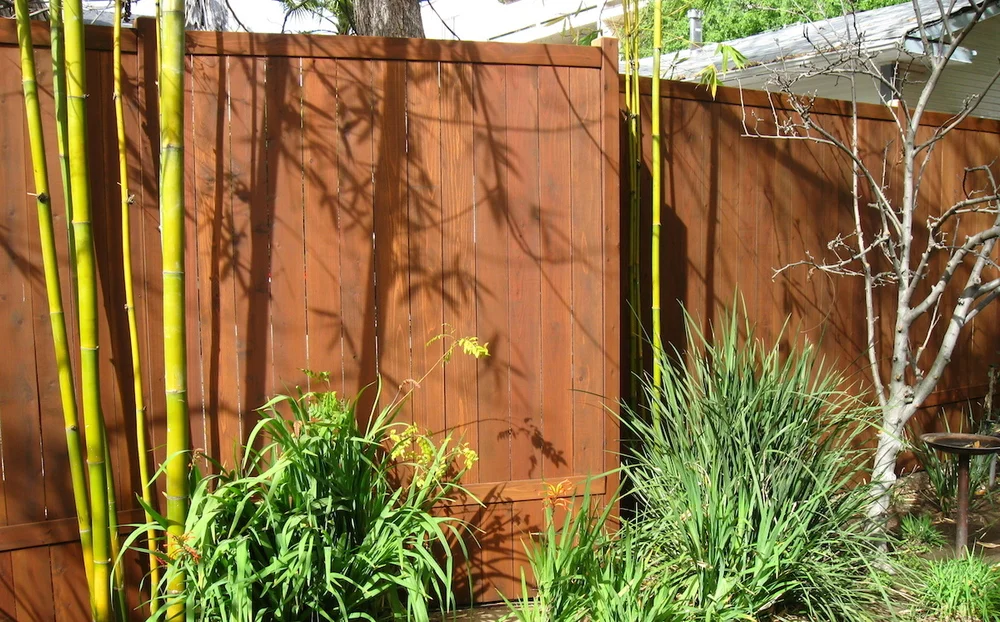
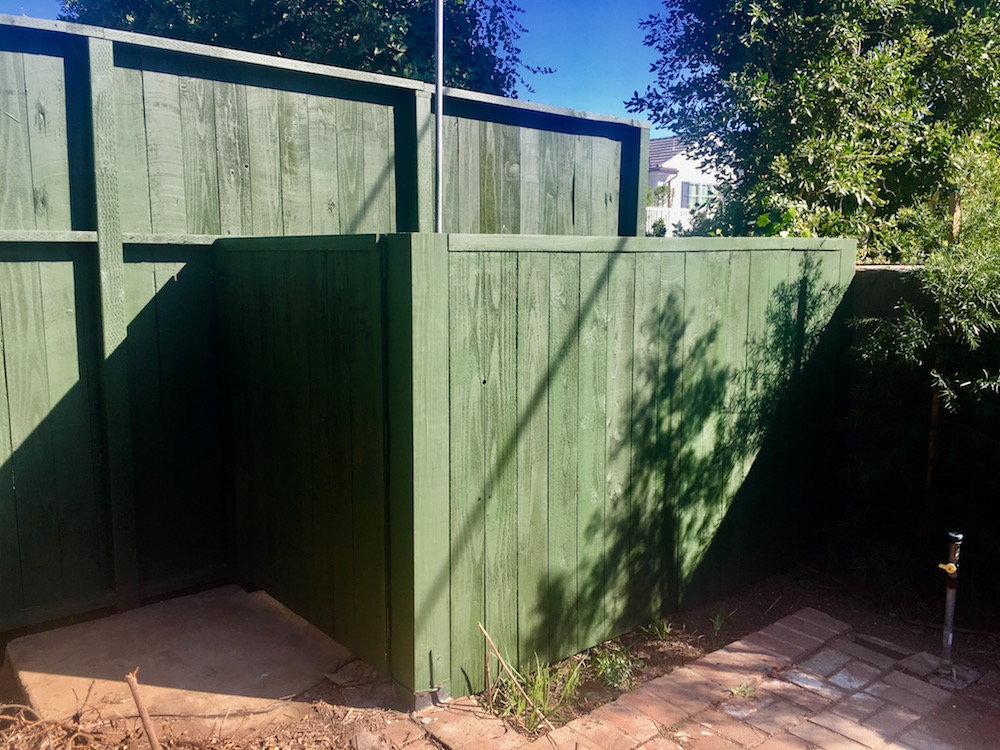
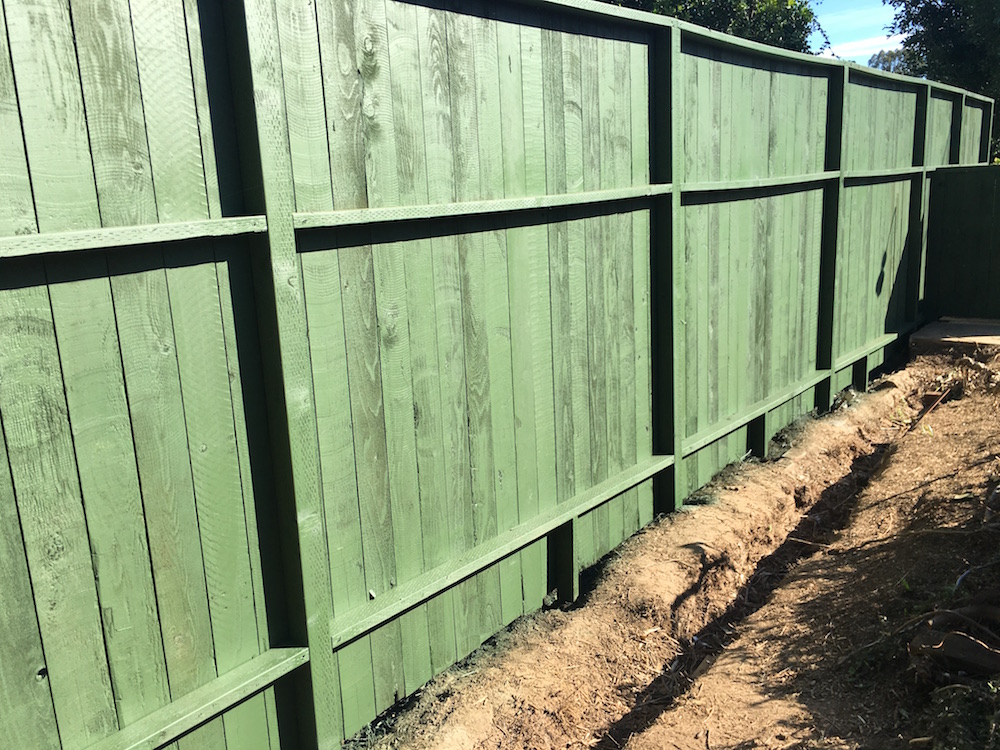
One of our past clients in Brentwood, California wanted a unique color for his fence. Because the plan was to cover the fence with all of the trees, this color was something we hadn't done before on any prior wood fence. I gotta say when the wood stain came out of the can we were a little surprised by the magnitude of the green. However, like a an article of clothing, this color looks way better on the fence than expected. We love the collaboration with our clients to provide us with the experience to share with all of our future fence clients. Brentwood, West LA, Westwood and Bel Air are packed with many types of vegetation that could work well with this fence color.


Mid-Range Fence Questions
What's in the build, how it compares to basic and custom, and how long it lasts in Los Angeles.
How much does a mid-range fence cost per linear foot?
Mid-range fencing starts at $75 per linear foot unstained and $115 per linear foot with stain.
Site conditions move the final number — slope, access, demolition of an existing fence, and what we hit when digging. Request a free estimate and we'll quote your specific run.
What's included in a mid-range fence build?
Three things define the spec:
- 6-foot common redwood fence boards for the visible surface
- Pressure-treated 4x4 posts set in concrete
- Pressure-treated framing behind the boards
The concrete-set posts and treated framing are what separate this from a basic build. It's the tier most homeowners choose when they want the fence to last without moving into custom work.
What's the difference between your basic, mid-range, and custom fencing?
Cost per linear foot, unstained and stained:
- Basic: from $65 / $85
- Mid-range: from $75 / $115
- Custom: from $100, with a 6-foot custom fence starting at $175
The jump from basic to mid-range buys structure — concrete-set posts and pressure-treated framing. The jump to custom buys design: wood species, board pattern, height, and detailing. Most people who want a fence that simply lasts land on mid-range; people treating the fence as a design element go custom.
Is common redwood different from clear redwood?
Yes. Common redwood contains knots and sapwood. Clear redwood is heartwood milled free of knots, is more stable and more rot-resistant, and costs meaningfully more.
On a vertical mid-range fence, common redwood is the sensible choice — knots are structurally minor on short vertical boards and read as natural character. Clear redwood earns its price on horizontal builds and close-up feature walls where every knot is visible.
Why do you set posts in concrete, and does it matter?
It's the single biggest factor in how long the fence stands.
Posts fail before boards do. A post set directly in soil wicks moisture at the ground line and rots from the inside, and it has nothing resisting lateral load — which is why fences lean before they fall. A concrete footing keeps the post plumb under wind and soil movement and holds it out of standing moisture. Combined with pressure-treated lumber, it's why we won't build a fence any other way at this tier.
Should I add stain, or is unstained fine?
We recommend staining, and the reason is cost as much as appearance.
Two coats significantly extend the life of the wood, and applying it during the build costs far less than bringing a crew back for it as a separate job later. Unstained redwood will grey and weather; if that's the look you want, it's a legitimate choice, but you're trading years off the fence to get it.
How long will a mid-range fence last in Los Angeles?
Longer than its finish, which is the useful way to think about it.
The posts and framing set the ceiling — pressure-treated 4x4s in concrete are what keep the fence standing and plumb, and that's the part nobody sees. The boards and the stain are what age visibly. Solid stain holds roughly 5 to 7 years before it needs redoing, and keeping that cycle is the main thing a homeowner controls. Sun exposure and proximity to the coast shorten it; a maintained finish extends the life of everything underneath it.
Can I add a matching gate to a mid-range fence?
Yes, and it's the most common add-on. Entry gate pricing depends on the frame:
- Wood frame: $1,000 to $3,000
- Steel frame: $1,500 to $5,000
Steel costs more up front but stays square far longer, which is why we recommend it for wider gates and anything in heavy daily use. When the gate is built as part of a larger fencing project, we can usually do it for less than as a standalone job. See our gate options.
Can I upgrade individual parts of the build without going full custom?
Yes. Mid-range is a starting spec, not a fixed package.
The upgrades people ask for most often are taller boards, clear redwood in place of common, tighter board spacing for more privacy, and better hardware. Any of those can be added on their own without moving the whole project into custom work. Tell us what matters most and we'll price the options against your budget rather than pushing you into the next tier.
How long does installation take?
Most residential runs move quickly once we're on site. Length of the run and access to the work area set the pace more than anything else.
Roughly 90% of delays come from digging — concrete, tree roots, sprinkler lines, plumbing, gas lines, or old fence posts. Demolition of an existing fence, building on a slope, and restricted property access add time as well. We give you a schedule with your bid and tell you immediately if anything unexpected surfaces.
Still have a question? See our full FAQ or request a free estimate — 310-736-2674