
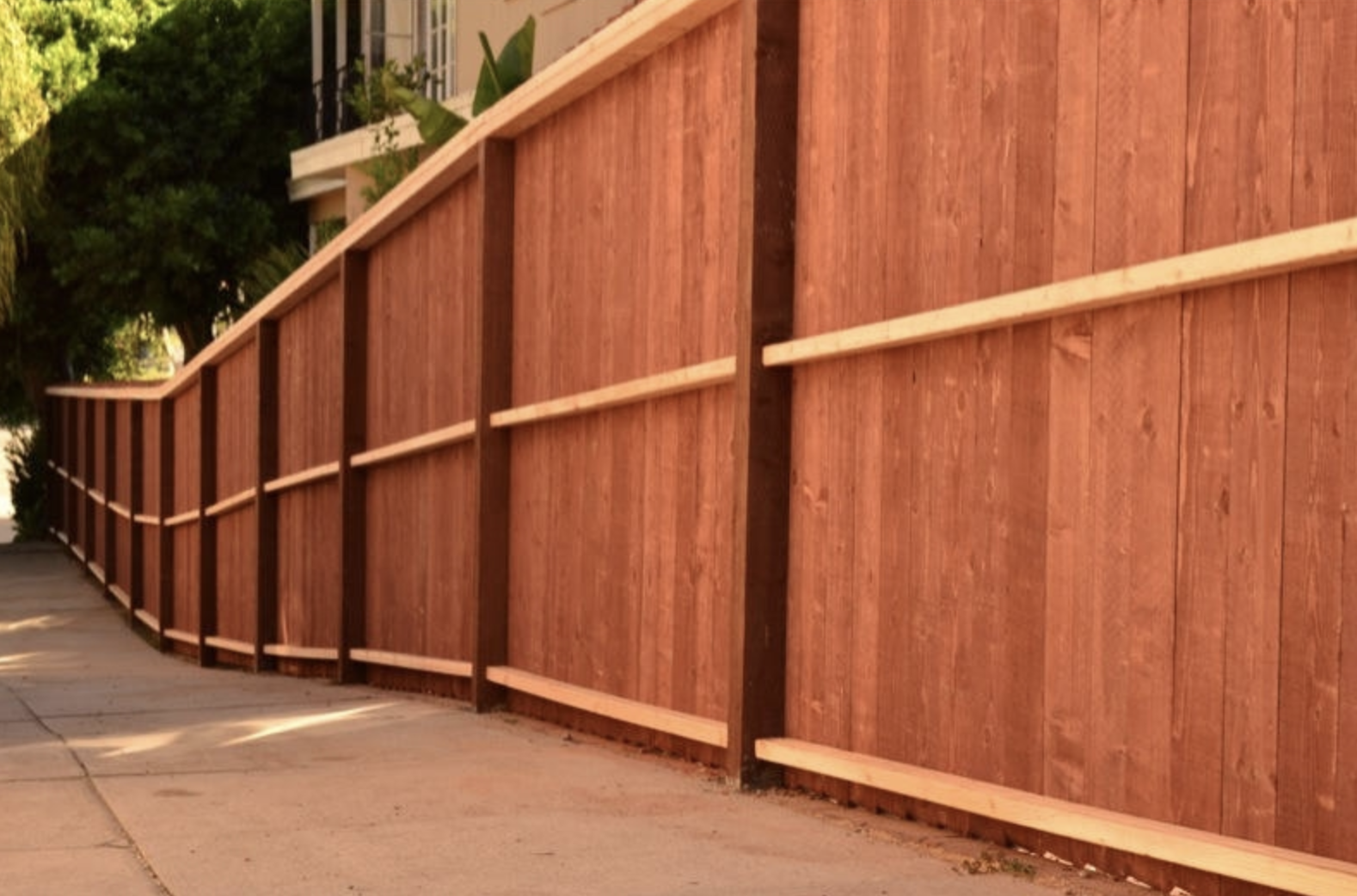
Clients ask us all the time, “What is the best type of wood to use for my fence?” So we thought we would take the time and write a blog post about it to help answer the all important question about wood.
Obviously when buying a fence you want your fence to look nice, so ascetics is important. However almost as important, if not more important is how long will the wood last? No one wants to pay top dollar for a fence that falls apart after a few years. Before we get into the different woods we use and suggest we want to make this disclaimer. The longevity of a fence depends on the type of wood but also the owner and how well they take care of the fence.
That said, let’s dig into the top two wood choices. Yes, I know there are more than two different types of wood. However, we want to focus on these two we recommend most in Southern California.
1. Redwood
Redwood is arguably the most extensively used type of wood for wood fencing and even though it comes at a high cost, redwood’s quality, durability, and aesthetic value make it among the best options. Although redwood is resistant to insects and rot, it still should be treated with a stain, preferably clear stain, to preserve its natural beauty, prevent it from turning grayish in color due to aging, and boost its resistance to insects and rot. Constant moisture, freezing, thawing, and dry conditions can damage redwood, so make sure you are aware of surroundings such as sprinkler systems.
2. Cedar
Cedar is an excellent choice of wood for fencing since it contains natural oils which are a deterrent to insects. Cedar wood is a middle-of-the-road option that might better fit a limited budget, and is also rot-resistant, giving it a longer lifespan compared to other types of wood. Treating cedar with a finish such as paint and wood stain prevents it from turning gray, like redwood. Although some people recommend painting cedar with acrylic to protect it from the elements, you won’t have to worry too much about that being that Southern California has very little temperature fluctuations.
Frequently Asked Questions
Thoughtful answers to real questions homeowners ask before investing in a fence or gate
1. What is the best type of wood for a fence?
Redwood and cedar are considered the best options due to their durability, resistance to insects, and overall appearance.
2. Why is redwood a top choice for fencing?
Redwood is known for its high quality, long lifespan, and natural resistance to insects and rot.
3. Is redwood worth the higher cost?
Yes, although it is more expensive, its durability and aesthetic appeal make it a worthwhile investment.
4. Does redwood need to be treated?
Yes, applying a clear stain helps preserve its natural look and protects it from aging and weather damage.
5. What happens if redwood is not maintained?
Without proper treatment, redwood can turn gray and may lose some of its resistance to elements.
6. Can environmental factors damage redwood?
Yes, constant moisture, freezing, thawing, and dry conditions can impact its durability.
7. Is cedar a good alternative to redwood?
Yes, cedar is a great option that offers durability and insect resistance at a lower cost.
8. Why is cedar resistant to insects?
Cedar contains natural oils that act as a deterrent to insects.
9. Does cedar last long as a fencing material?
Yes, cedar is rot-resistant and provides a long lifespan when properly maintained.
10. Does cedar require maintenance?
Yes, applying paint or stain helps maintain its color and durability.
11. Will cedar change color over time?
Yes, like redwood, cedar can turn gray if it is not treated.
12. Is cedar more budget-friendly than redwood?
Yes, cedar is considered a middle-range option that fits better within a limited budget.
13. What affects the lifespan of a wood fence?
The type of wood, environmental conditions, and how well the fence is maintained all affect its lifespan.
14. Is maintenance important for wood fences?
Yes, proper care such as staining and sealing helps extend the life of the fence.
15. How does moisture impact wood fences?
Excess moisture can cause damage, reduce durability, and lead to rot if not properly managed.
16. Should I consider my surroundings before choosing wood?
Yes, factors like sprinkler systems and exposure to moisture can impact the wood’s longevity.
17. Are redwood and cedar suitable for Southern California?
Yes, both are commonly recommended due to their resistance to insects and adaptability to the climate.
18. Do temperature changes affect wood fences?
Yes, extreme conditions like freezing and thawing can damage wood over time.
19. How do I choose between redwood and cedar?
Choose redwood for premium quality and appearance, or cedar for a more cost-effective yet durable option.
20. Is proper care as important as the type of wood?
Yes, even the best wood will not last long without proper maintenance and care.